
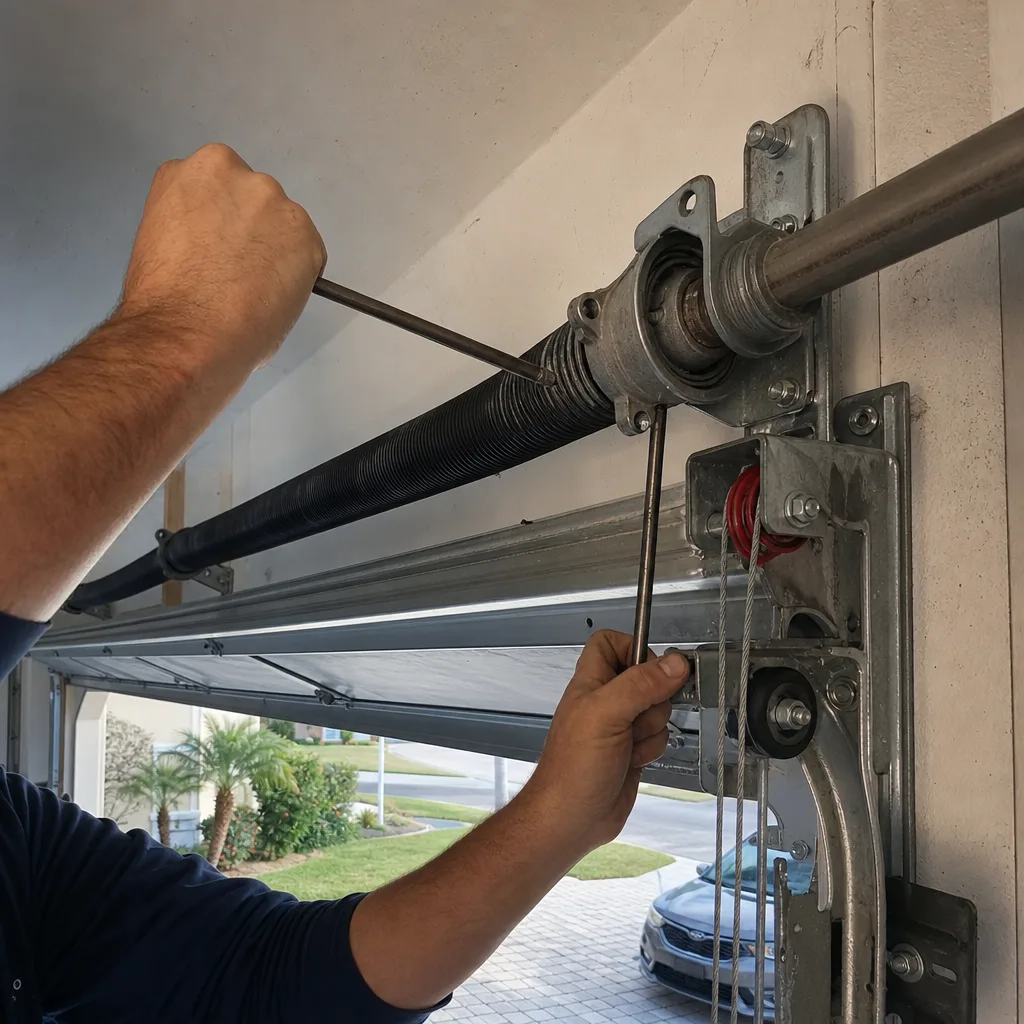
Last updated November 20, 2026
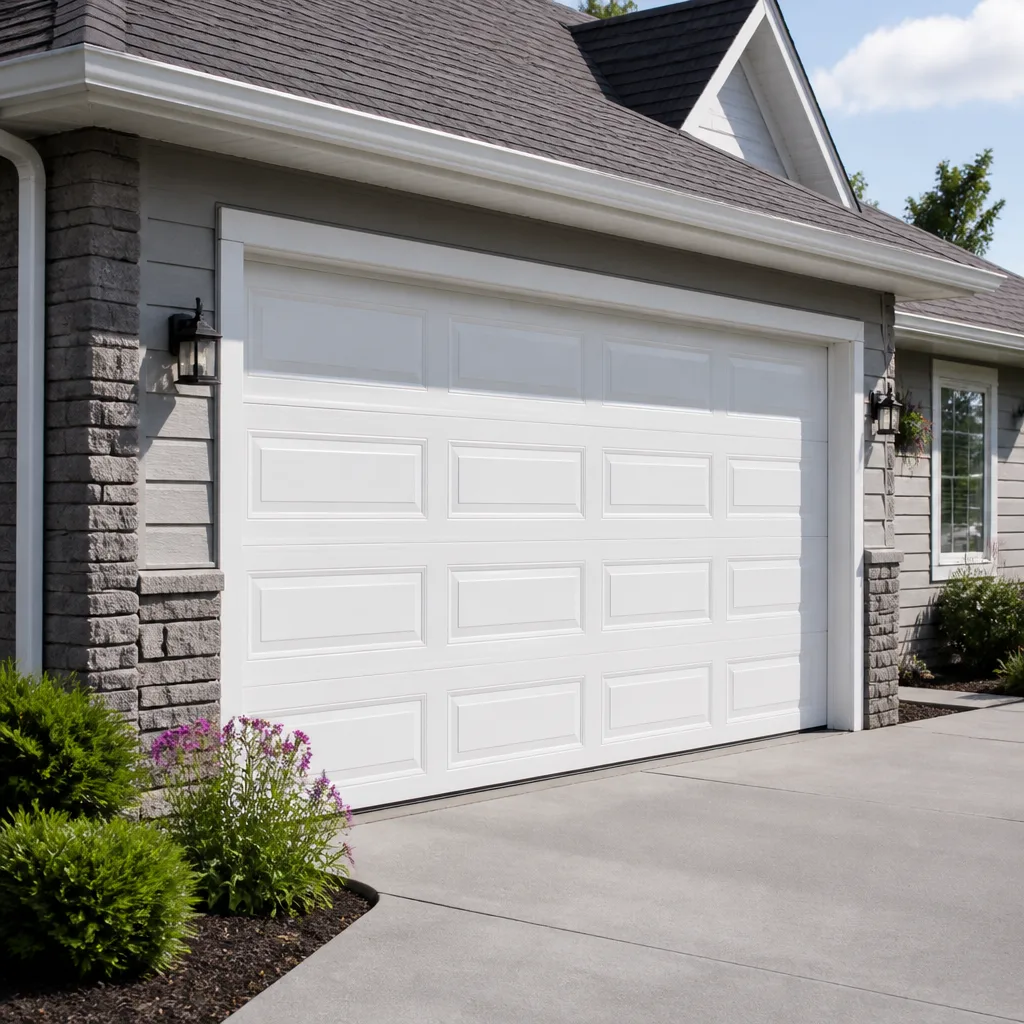 Raised-panel steel
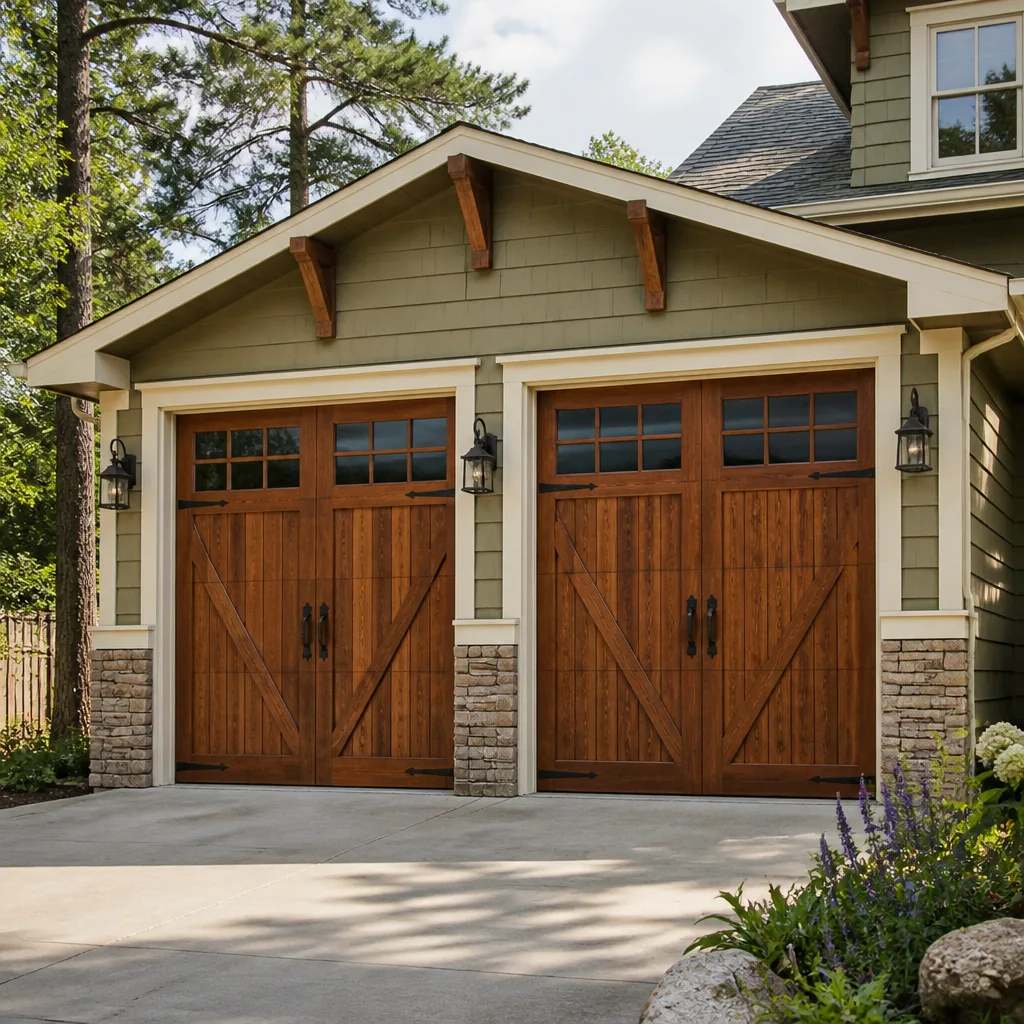 Carriage house
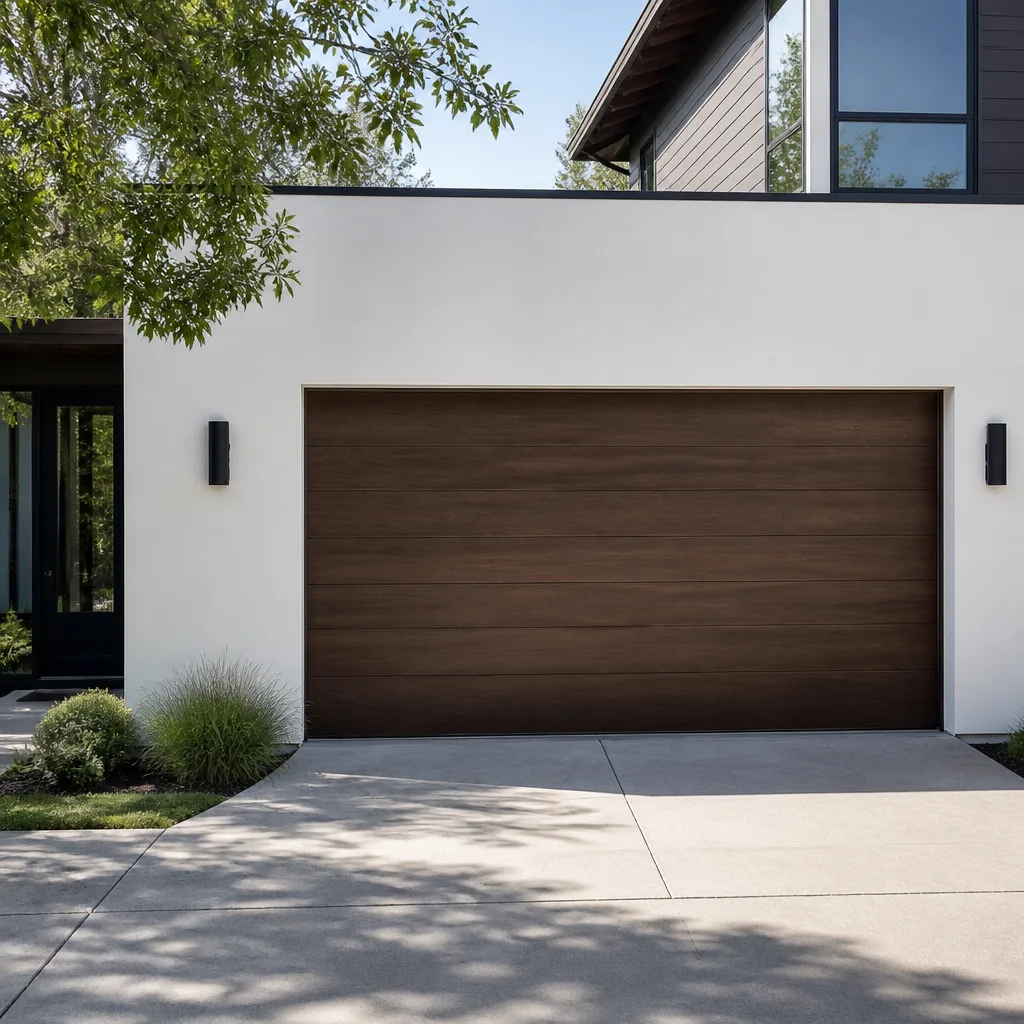 Modern flush
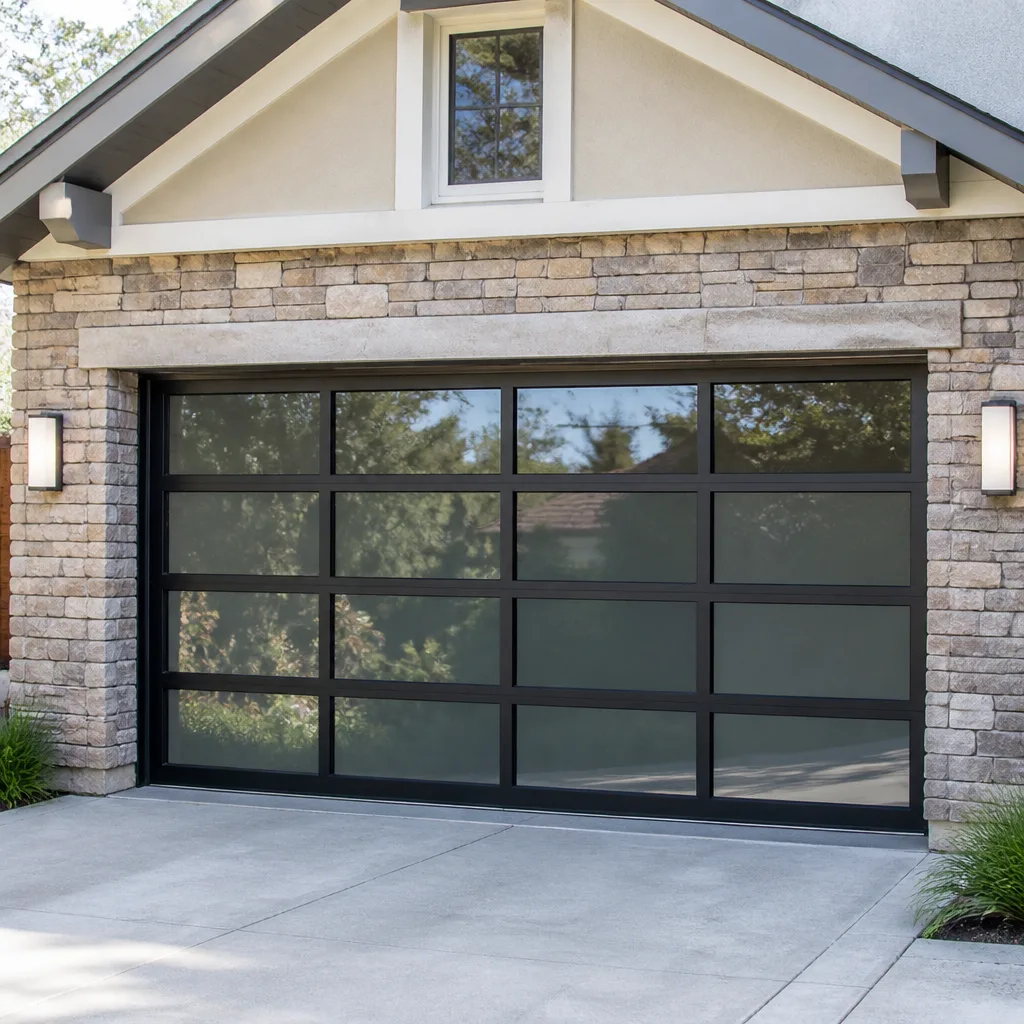 Full-view glass
 LiftMaster openers
 Chamberlain openers
Full 25-point door and opener safety check with every visit - springs, cables, rollers, tracks, and your LiftMaster or Chamberlain opener included
You get a price before we start. It does not change when the pro arrives.
Get your free estimateHow to Hire a Garage Door Contractor in Daytona Beach: A Step-by-Step Guide
Here’s the mistake we see most often in Daytona Beach: homeowners worry about hiring someone unlicensed, then hand the job to a licensed general handyman who treats the garage door as a one-off between gutter cleanups. The license is real, the insurance is real, and the work still goes wrong, because a garage door is a wind-rated structural system, not a weekend project. Florida has a specific license category for this kind of work, and the questions that separate a door specialist from a generalist are the ones nobody thinks to ask until the door is already failing. This guide walks you through exactly what to verify, what to ask on the phone, and what a legitimate written estimate should look like before you sign anything in Daytona Beach.
Quick Answer
Hire a garage door contractor in Daytona Beach by verifying a Florida Specialty Structure contractor license on the DBPR portal, confirming the insurance certificate lists your property address, and phone-screening for wind-load knowledge and brand familiarity. Ask specifically whether the company does garage doors as its primary trade. A licensed generalist who occasionally handles doors will pass a license check and still miss the details that matter in Volusia County’s wind zone.
Styles & brands we work with
- Raised-panel steel
- Carriage house
- Modern flush
- Full-view glass
- LiftMaster openers
- Chamberlain openers
Table of Contents
- Which Florida License Should You Verify Before Signing Anything?
- Five Phone-Screen Questions That Reveal a Real Specialist
- Red Flags After Hurricane Season in Daytona Beach
- What a Legitimate Written Estimate Must Itemize
- How to Read an Insurance Certificate
- Why Spring Work Is the Real Test of a Contractor
- Matching the Contractor to Your Door and Opener Brand
Which Florida License Should You Verify Before Signing Anything?
For garage door work that goes beyond routine adjustment, Florida issues a Specialty Structure contractor license through the Department of Business and Professional Regulation. You can pull any license on DBPR’s online portal in a few minutes, and you should do it before you sign an estimate, not after.
The catch is that a majority of handyman listings on local platforms don’t carry that category. They may hold a general or “handyman” registration that allows light repairs, and they may be entirely honest about it. But garage door installation, replacement, and structural work fall under scope that a general handyman license doesn’t cover. When you search DBPR, you’re looking for two things: the license category and its status. Active is the minimum. A category that specifically names specialty structure, garage doors, or a closely related specialty is what you want to see.
Here’s what to verify on the portal:
- License category. Specialty Structure, or a category that names garage doors or overhead doors directly. A general handyman registration isn’t the same thing.
- Status. Active, not delinquent, not suspended. The portal shows this clearly.
- Name match. The name on the license should match the name on your estimate and the name on the insurance certificate. If a sub is doing the work, ask for that sub’s license too.
- Expiration. A license that expires next month is still active, but you’ll want to know in case a callback is needed later.
Ask the contractor to send you the license number in writing before you agree to anything. Anyone who hesitates on that request is telling you something useful.
Five Phone-Screen Questions That Reveal a Real Specialist
You can learn a lot in five minutes on the phone, before anyone shows up. The goal isn’t to stump the contractor. It’s to hear whether the answers come easily, which is what happens when someone does this work every day.
1. “What’s your primary trade?” If the answer is “we do garage doors,” you’re in the right conversation. If the answer is “we do doors, but also fencing, pressure washing, and some light electrical,” you’re talking to a generalist. That’s not a knock on their skills. It’s a mismatch for precision work in a wind zone.
2. “How do you handle wind-load requirements for this area?” Volusia County sits in a wind zone, and a real specialist will know that not every door is rated for your location. They’ll want to know the opening size, the wind rating of the existing door, and whether the bracing is correct. A generalist will likely say something like “it’s all the same door.” It isn’t.
3. “Do you work on my opener brand?” If you own a LiftMaster or a Craftsman, ask them directly. A specialist will answer without hesitation. A generalist will say “we’ll take a look and see.” There’s a difference between confident and vague.
4. “Who does the spring work, and how is it handled?” Torsion and extension springs are under high tension and genuinely dangerous. A real specialist will tell you the spring work is done by trained technicians and describe the safety approach. Vague answers about springs are a stop sign.
5. “Will you be doing the work, or is a sub coming?” Either answer is fine, as long as it’s clear. What you don’t want is to find out at the door that the person who quoted the work isn’t the person doing it.
You can read more about how a specialty shop handles each of these on our garage door repair page, but the phone questions above will tell you most of what you need.
Red Flags After Hurricane Season in Daytona Beach
After a storm season, Daytona Beach fills up with out-of-area contractors. Some are legitimate companies that travel to storm zones and do solid work. Many are not. The challenge is telling them apart before you hand over a deposit.
Post-storm surges have predictable patterns, and the red flags are specific:
- No local license pull. They ask you to sign a contract but never offer to show a Florida license. Out-of-area doesn’t mean unlicensed, but the license still has to be valid here.
- Pressure to sign today. Real contractors are busy after a storm. If someone is knocking door-to-door with same-hour pricing, ask why they aren’t already booked.
- No physical proof of insurance. A certificate of insurance should be an email away. If they say “we’ll get it to you later,” that’s your answer.
- Vague estimate with a big deposit request. Florida has rules about deposits, and a legitimate company will put the terms in writing and show you the itemized scope.
- No door or brand familiarity. Ask what they service. If they can’t name a single brand, they’re not a door specialist.
- “Storm pricing” language. If the price on the estimate is different from the price on the invoice, that’s not storm pricing, that’s bait and switch.
The practical move is to slow down. Ask for the license number in writing, call DBPR and verify it, request the insurance certificate, and ask for the names of two local references you can call. A legitimate out-of-area contractor will pass all of that without blinking. A problem one will find reasons to skip a step. The same diligence applies whether you’re in Ormond Beach, Port Orange, or right off International Speedway Boulevard.
What a Legitimate Written Estimate Must Itemize
A real estimate and a “flat rate” quote are different documents. The flat rate is a number. The itemized estimate is a scope of work with a price attached to each part of the job. You want the second one.
Here’s what a written garage door estimate in Daytona Beach should show:
- Parts, line by line. Torsion springs (one per line, and if a matched pair is being replaced, both lines), cables, rollers, hinges, drums, bearings, opener parts, and the door panel or section if that’s part of the work. A price range for one spring isn’t the same as a pair, so make sure the line items are clear.
- Labor. Separate from parts. Doesn’t have to be broken down by hour if the company prices per job, but it should appear as its own line.
- Haul-away. If old parts, an old door, or old panels are being removed, the disposal cost should be named.
- Permit fee, if applicable. Some jobs need permits and some don’t, and the rules vary by municipality. Ask the contractor to tell you whether a permit is required and how the fee is handled. If they can’t answer, call the city’s building department directly.
- Total price. Clearly stated, and explicitly described as the price for the scope of work listed.
A vague “flat rate” without an itemized scope is a problem because it hides what you’re actually buying. If a repair turns into a bigger job, you want a reference document that says what was quoted and what was changed, and by how much, before the extra work begins. The written estimate should set the final price for the scope it covers.
How to Read an Insurance Certificate
An insurance certificate should arrive as a document you can actually read, and it should list your property address. A blanket policy with just a policy number and a company name isn’t enough. Ask for a certificate that shows the job in Daytona Beach, the coverage type (general liability, and workers’ comp if they have employees), and the policy period.
The parts to look at:
- Insured name. Matches the name on the estimate and the license.
- Certificate holder. If the certificate is issued to you, that’s a strong sign. If it’s just issued to a property manager, ask for a version issued to you.
- Policy period. Still in force as of the work date.
- Coverage limits. Look for general liability at a level that matches the work. Garage door replacement is not a small exposure.
- Additional insured. For larger jobs, you can ask to be named as an additional insured. It’s not always required for a residential repair, but it’s reasonable for anything substantial.
If the certificate only carries a policy number and no address, ask the contractor’s office to send a new one with the address listed. A legitimate company won’t hesitate. This is one of the fastest ways to separate a real operation from a phone-only one.
Why Spring Work Is the Real Test of a Contractor
Torsion and extension springs are under high tension. That’s the whole reason you hire a professional. A spring that’s under load can cause serious injury if it’s released incorrectly, and the tools and technique involved are not something a homeowner should attempt. This is not a warning to scare you into a service call. It’s how the work actually goes.
So how do you tell whether you’re talking to someone who does spring work regularly? The questions are the same ones you’d ask of a specialist, and the answers are more detailed than you’d expect from a generalist:
- Do they ask for the door’s size and weight before quoting? Spring sizing depends on it.
- Do they specify whether it’s a torsion or extension system? They’re different repairs.
- Do they reference spring life and cycle ratings in general terms, without promising a specific number of cycles?
- Do they explain that a matched pair is usually replaced together, and quote accordingly?
If you want a sense of what a specialty shop covers in spring work, our garage door spring repair page describes the scope. The point for hiring purposes is that spring work is not a side task. It’s a skill that shows whether a contractor’s trade is really garage doors.
Matching the Contractor to Your Door and Opener Brand
Most homeowners in Daytona Beach own a door or an opener from one of a handful of brands. Knowing whether your contractor works on your specific brand tells you a lot about how the repair will go.
The brands that come up most often are LiftMaster, Chamberlain, Genie, Clopay, Amarr, Wayne Dalton, Craftsman, and Raynor. They’re not interchangeable. The logic board on a LiftMaster opener isn’t the same as a Genie, and a Wayne Dalton door panel isn’t sourced the same way as a Raynor. A specialty shop that works on all of these brands has a clear advantage over a company that has to look up the manual every time.
Ask two questions when you call:
- “Do you work on my opener brand?” If you have a Craftsman opener from the last decade, the answer should be a quick yes.
- “What’s your experience with my door brand?” For a LiftMaster opener, opener repair experience matters. For a Wayne Dalton door, panel and spring familiarity matters.
If you want a sense of what a real opener repair looks like, our garage door opener repair page walks through the typical diagnosis. The hiring takeaway: a company that works on your brand doesn’t have to guess, and guessing costs you a callback.
Common Mistakes to Avoid
- Checking the license but not the license category. A valid handyman registration is not the same as a specialty structure license. Check the category on DBPR, not just the status.
- Taking an insurance certificate with no address. A blanket policy number doesn’t confirm coverage for the work at your house. Ask for the address on the certificate.
- Accepting a flat rate with no itemization. The flat rate hides the scope. You want the parts, labor, and haul-away broken out, so the price matches the work.
- Choosing a generalist because they answered the phone first. Garage doors are a specialty. The company that answers fastest isn’t always the company that does the work best.
- Skipping the wind-load question. Volusia County’s wind zone means the door’s rating and bracing matter. A generalist may not know to ask.
- Letting a post-storm contractor skip the paperwork. Storm season brings out-of-area companies who count on homeowners being too rushed to verify. Take the two minutes to check.
- Agreeing to a deposit before you have a written scope. A written estimate should set the price. A deposit without a scope is a risk, and it’s avoidable.
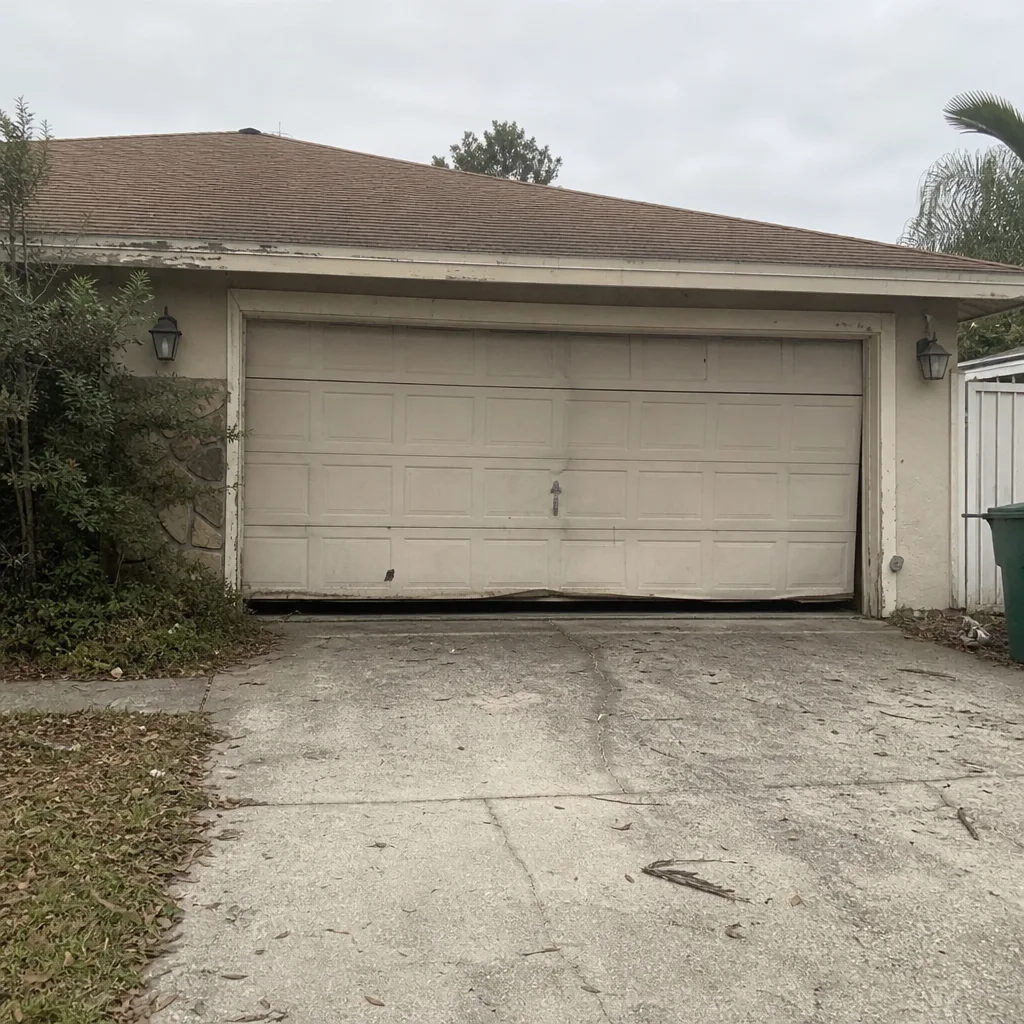
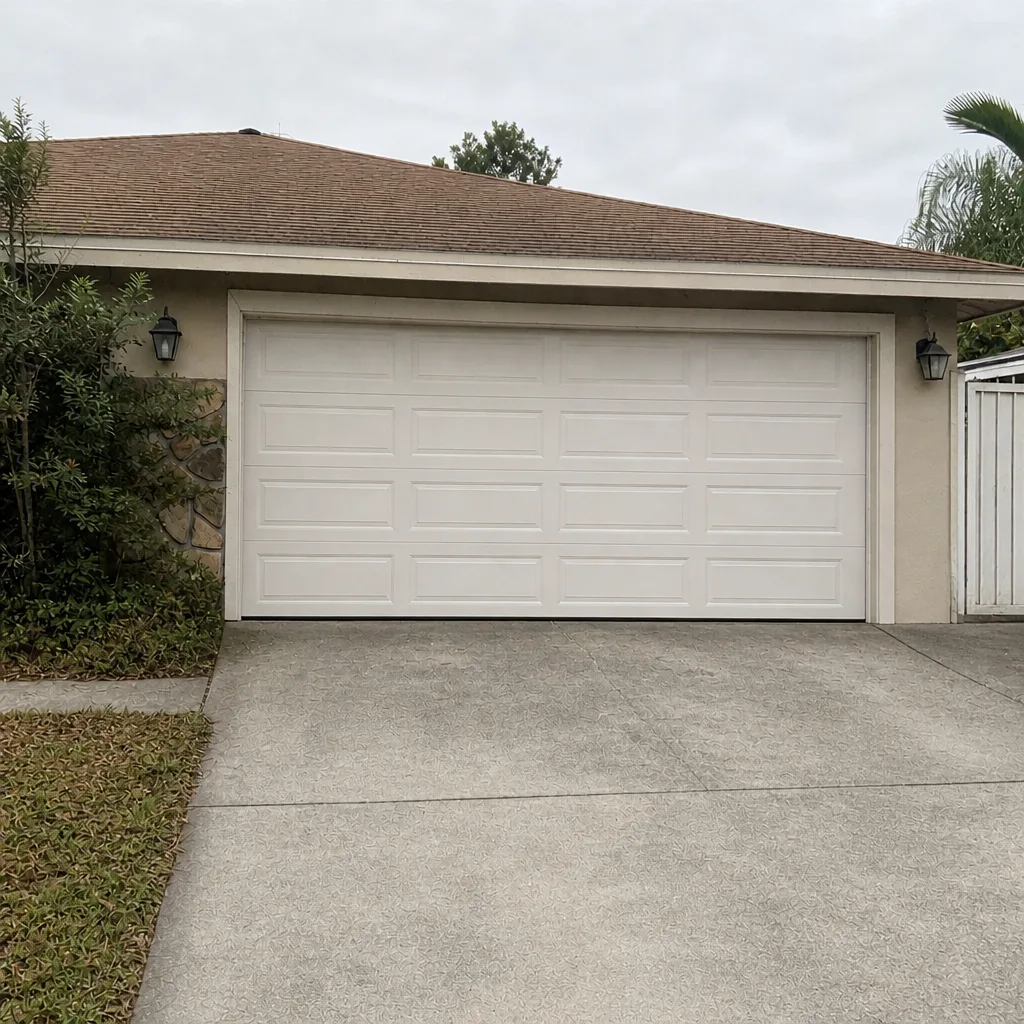
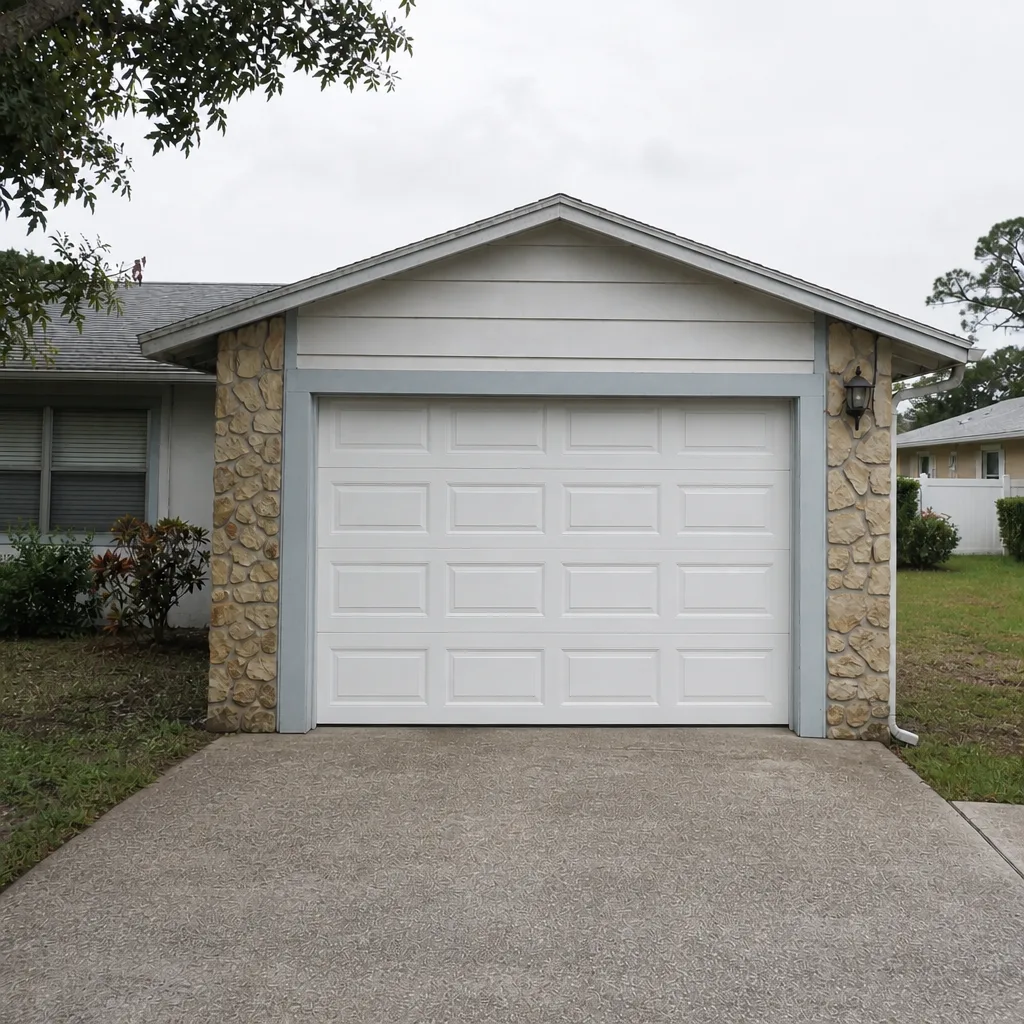
See the difference
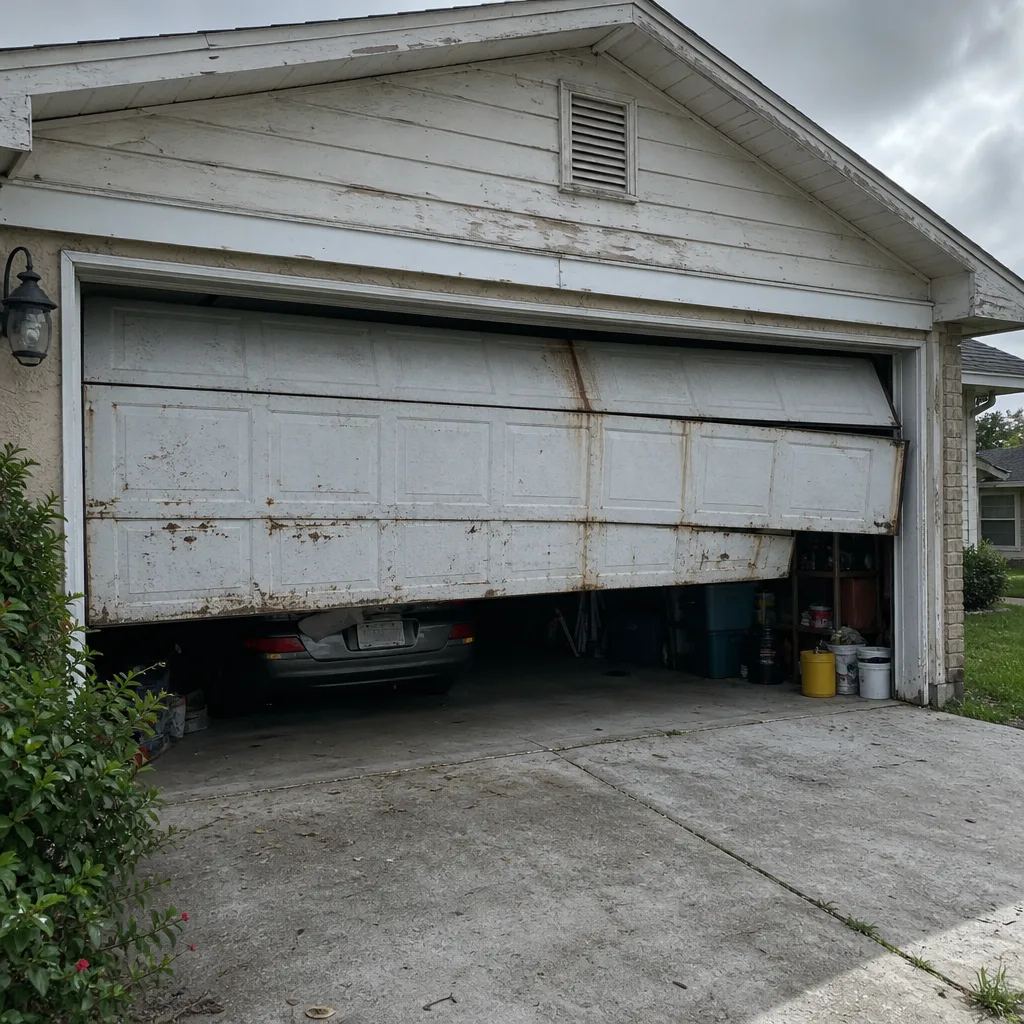 Before
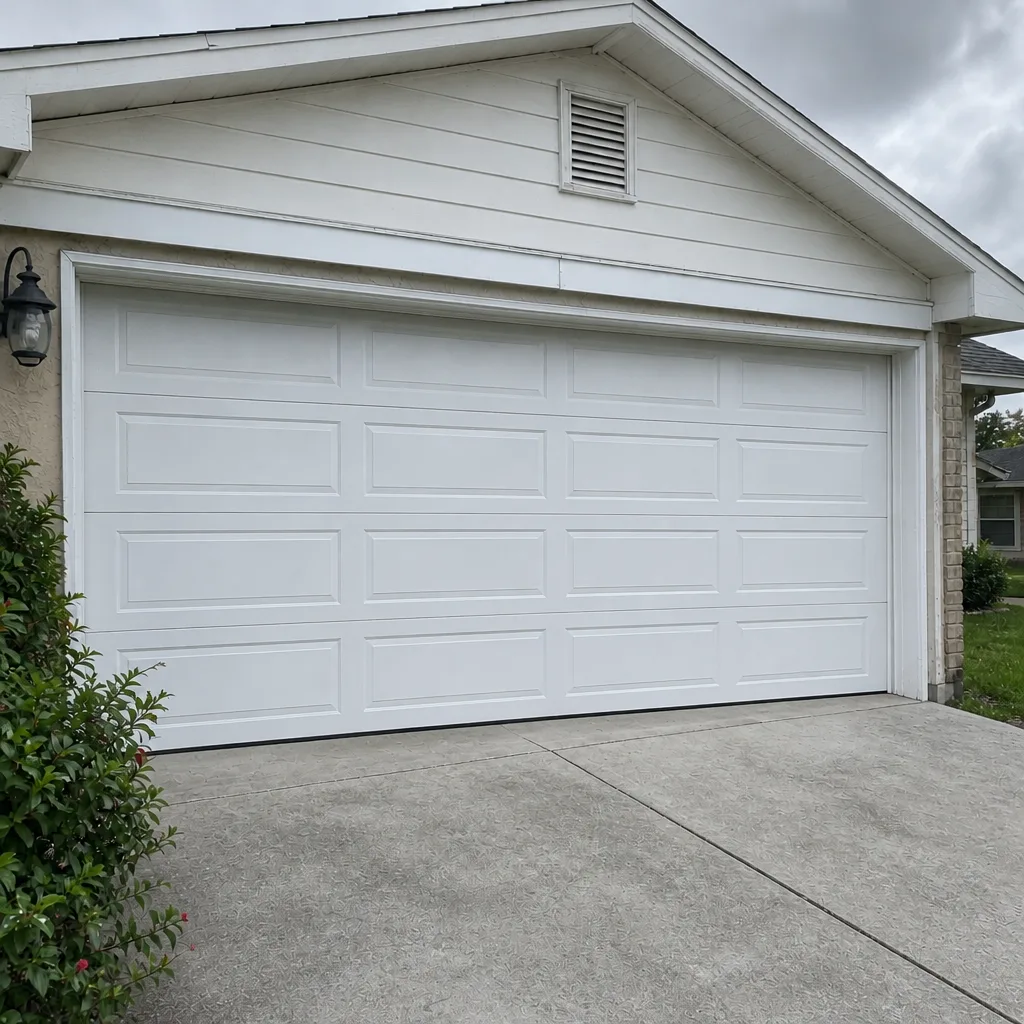 After
 Before
 After
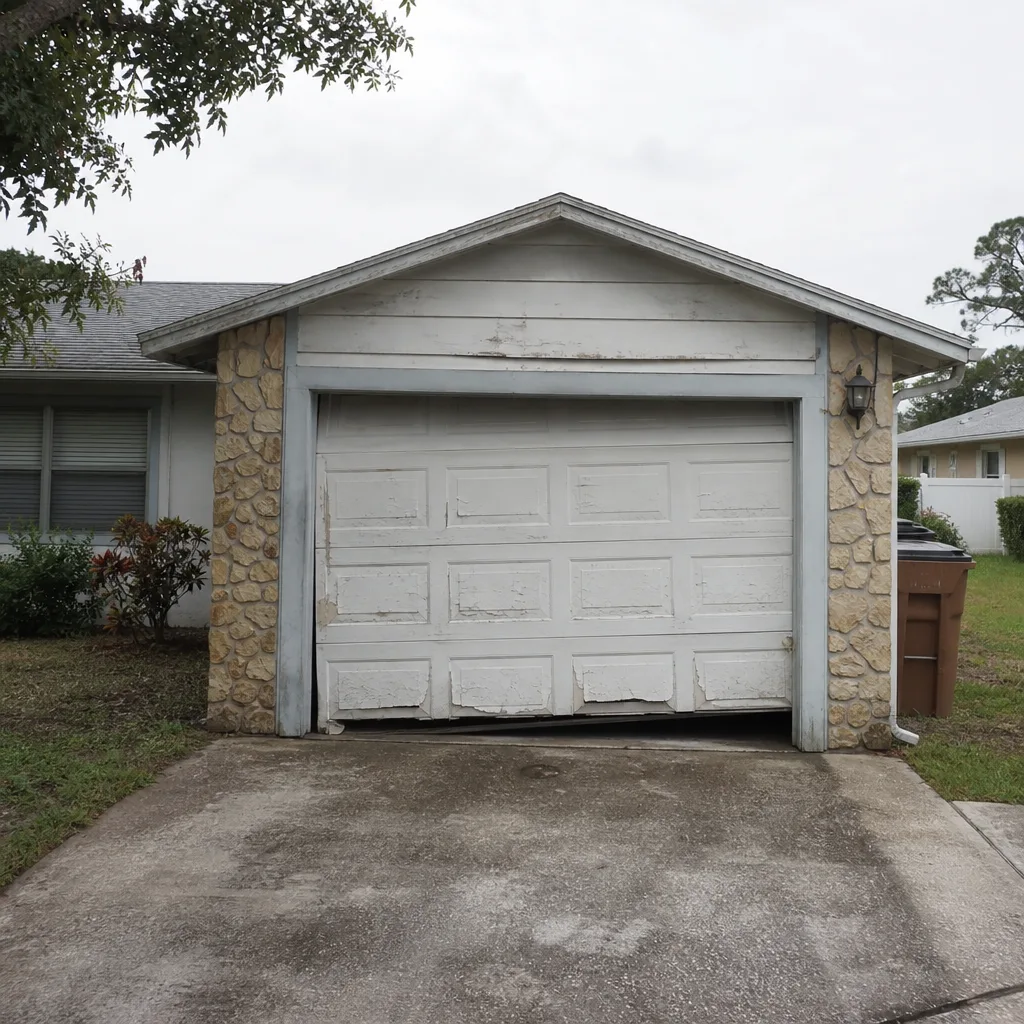 Before
 After
When to Call a Professional
Some garage door issues are genuinely fine to check yourself with a visual inspection: a loose hinge, a misaligned weather seal, an opener that needs a remote battery. The rest need a trained technician. Call a professional when a spring breaks, when the door won’t close all the way, when the opener runs but the door doesn’t move, when the door comes off its track, or when you hear a loud bang from the spring assembly. Those are the situations where the cost of guessing wrong is higher than the cost of a service call.
You should also call when the door is under wind-rated load and you’re not sure the bracing is right. That’s not a repair, it’s a safety question, and it’s worth asking a specialist. Daytona Beach Garage Door Repair Co offers free estimates in Daytona Beach, and our technicians have up to 13 years of experience on spring, opener, and door work. We answer 24/7, and fast dispatch runs from 7am to 7pm, Sunday through Friday. Call (888) 848-8460 for a free estimate.
Frequently Asked Questions
Look up the license on the Florida DBPR online portal and check the category, status, name, and expiration. You want an active Specialty Structure license, or a category that names garage doors or overhead doors. If the license is a general handyman registration, it may not cover the scope of structural garage door work. Ask for the license number in writing before you sign anything, then verify it yourself.
Ask what the contractor’s primary trade is, how they handle wind-load requirements for your area, whether they work on your opener and door brands, who does the spring work, and whether they’ll be the one doing the job. In Daytona Beach, the wind-load and spring-work answers separate a specialist from a generalist. A real specialist answers all five without hesitation. Call (888) 848-8460 to talk through your door with a specialist.
Parts line by line, labor, haul-away, permit fee if applicable, and a clear total price. A one-spring quote and a matched-pair quote are not the same thing, so make sure the estimate shows which one you’re getting. A vague flat rate without itemization is a red flag. The written estimate should set the final price for the scope it covers. Estimates are free, so ask for the itemized version.
Some are legitimate and some aren’t, and the difference is in the paperwork. Ask for a Florida license number in writing, verify it on DBPR, request an insurance certificate with your property address, and call two local references. Storm season brings a surge of contractors who count on homeowners being too rushed to check. Take the time. The honest ones will pass every step.
You want the itemized estimate. The flat rate hides the scope, and if the repair turns out bigger than expected, you want a document that shows what was quoted and what changed. Itemization also tells you whether the contractor is replacing one spring or a pair, which is a big difference in what you’re paying for. Ask for the itemized version every time.
The local pros we connect you with are licensed and insured as their state requires, and you should verify the specific credentials before any work begins. A garage-door specialist will offer the license number and the insurance certificate without being asked twice. Confirm that the certificate lists your property address, not just a blanket policy number. Then call (888) 848-8460 with any questions about the scope or the estimate.
The Bottom Line
Hiring a garage door contractor in Daytona Beach comes down to a few verifiable facts: an active Florida Specialty Structure license on DBPR, an insurance certificate that lists your address, a written estimate with parts and labor itemized, and a contractor whose primary trade is garage doors. The questions that separate a specialist from a generalist are the wind-load question and the spring-work question, and you can ask both on the phone before you book anything. If you want to talk through your door with a team that only does garage doors, we’re happy to help. You can start with our Daytona Beach Garage Door Repair Co page for an overview, or call (888) 848-8460 for a free estimate. We answer 24/7, and fast dispatch from 7am to 7pm, Sunday through Friday.
Written by the team at Daytona Beach Garage Door Repair Co.