
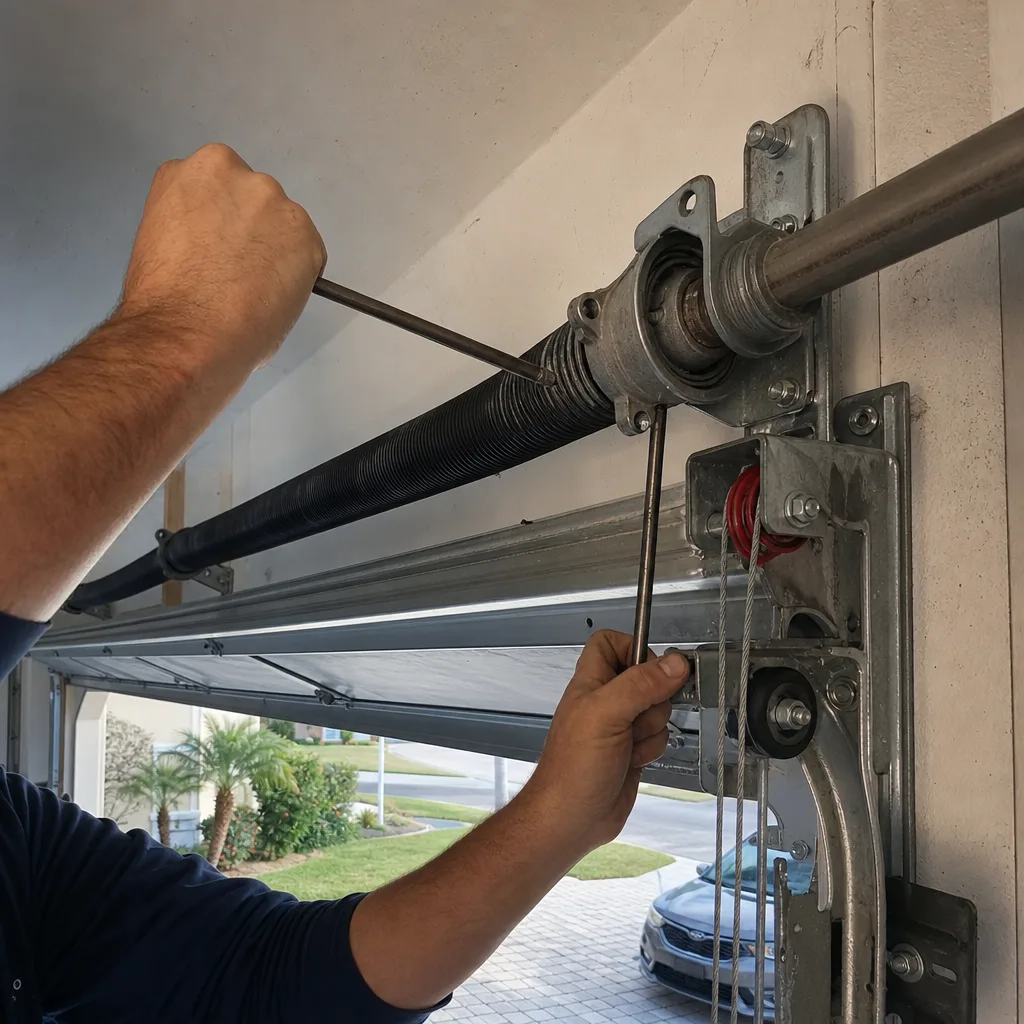
Last updated November 20, 2026
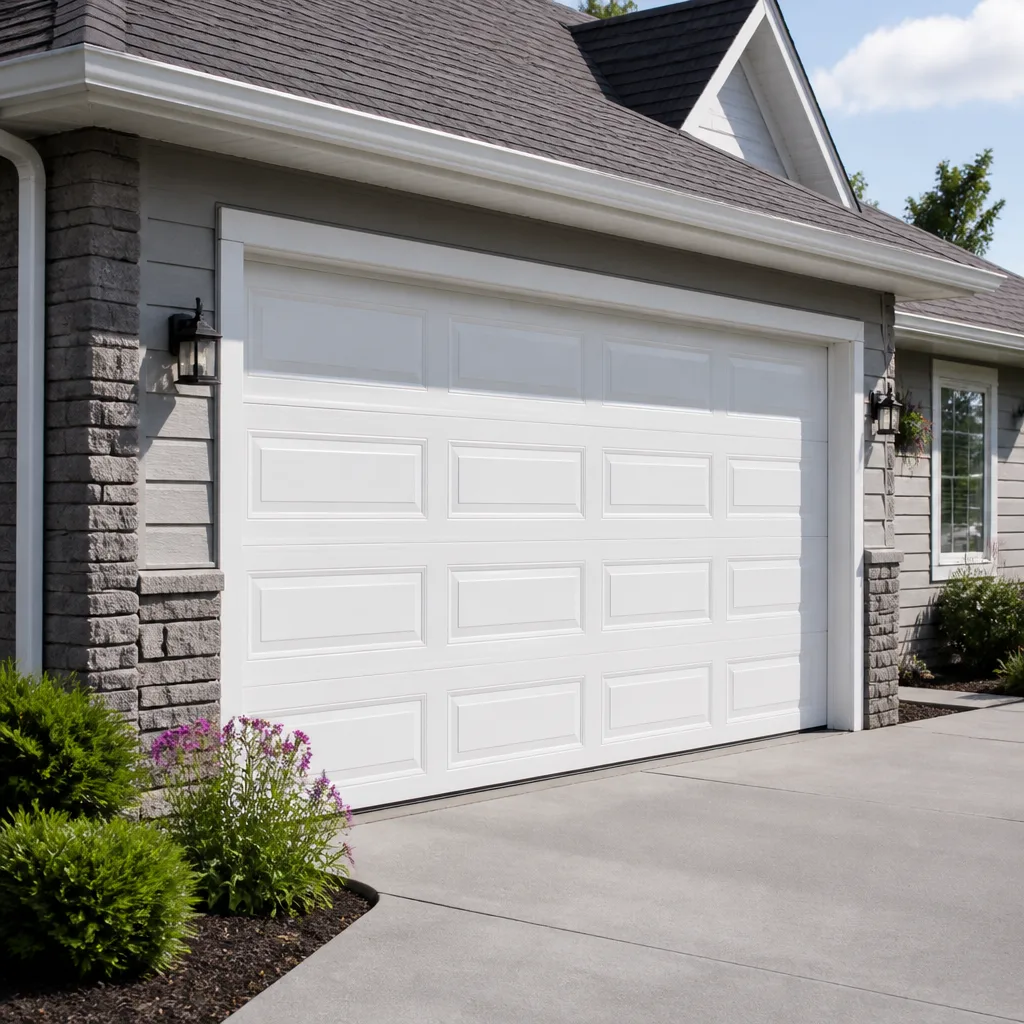 Raised-panel steel
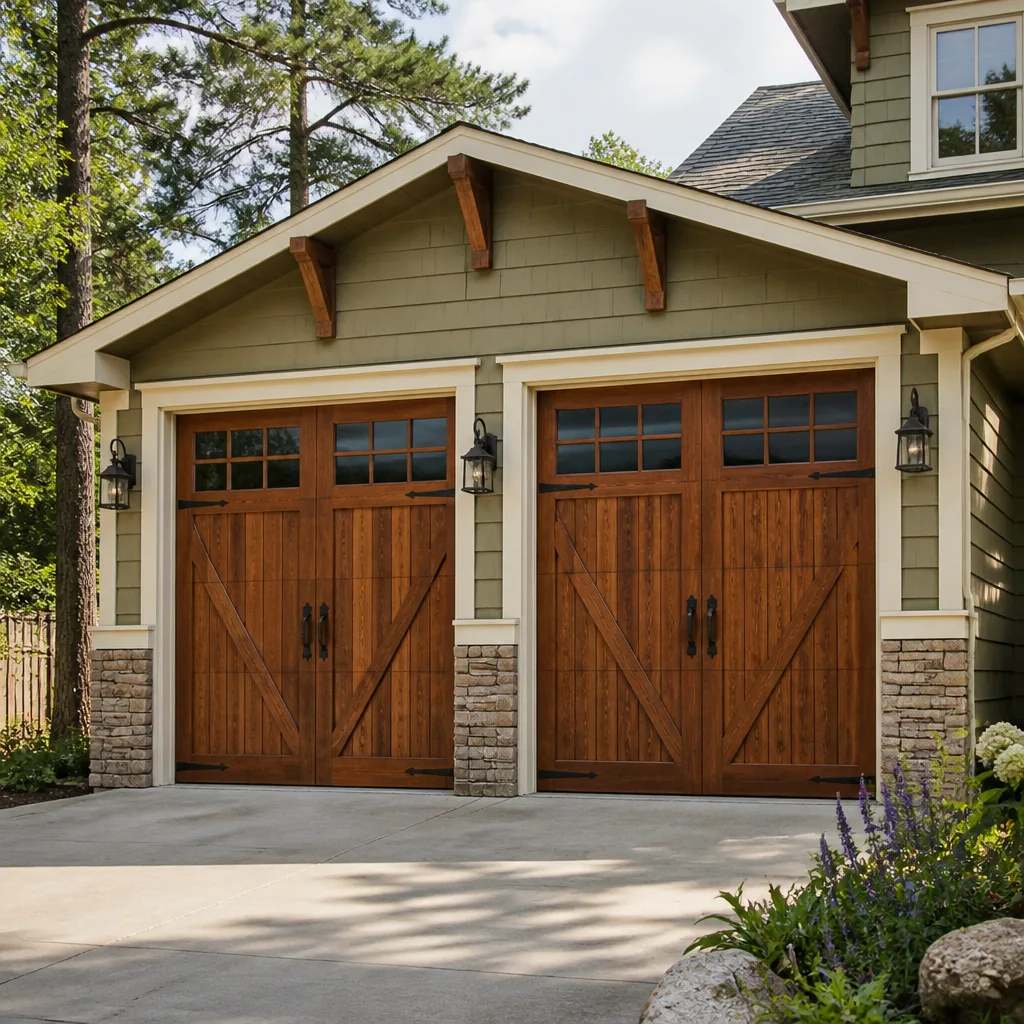 Carriage house
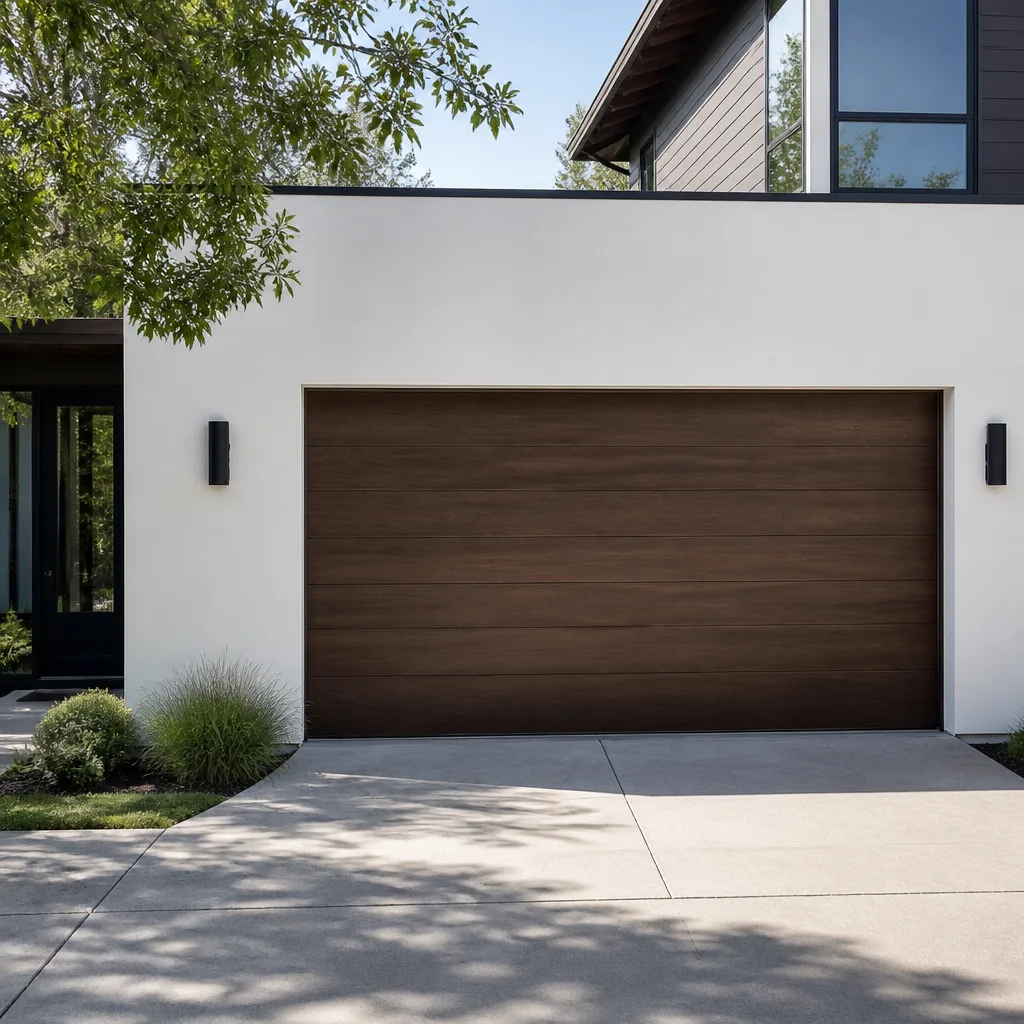 Modern flush
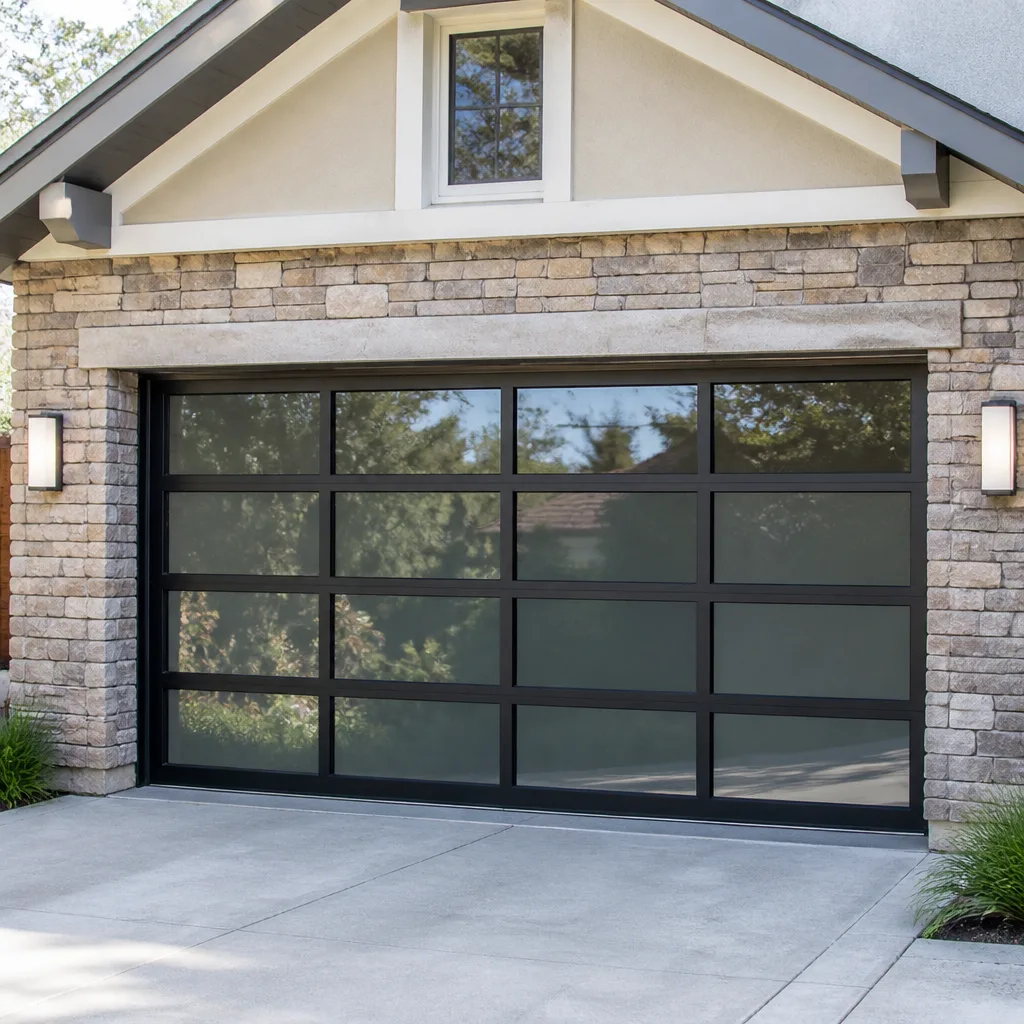 Full-view glass
 LiftMaster openers
 Chamberlain openers
Full 25-point door and opener safety check with every visit - springs, cables, rollers, tracks, and your LiftMaster or Chamberlain opener included
You get a price before we start. It does not change when the pro arrives.
Get your free estimateGarage Door Warning Signs: A Daytona Beach Homeowner’s Reference Guide
A door that’s slightly off-balance feels like a minor annoyance. It still opens, it still closes, and most of us file it under “deal with it later.” But an unbalanced door places asymmetric load on a single spring, and in a coastal environment where springs are already fighting corrosion, that imbalance can shorten spring life by 40%. That’s the counterintuitive part: in Daytona Beach, the signs that look cosmetic on the surface often point to a faster-moving failure than the same signs would inland. This guide separates the two. You’ll learn which warning signs you can safely monitor for a week or two, which ones need a call the same day, and how to read rust, sound, and motion the way a technician does.
Quick Answer
Universal warning signs include a door that reverses before touching the floor, a loud bang from the spring area, visible sagging, and a door that opens crooked. In Daytona Beach, add two coastal-specific red flags: rust pitting on the spring coils (urgent) versus surface rust on a panel (cosmetic), and a track issue caused by summer heat expansion rather than a sensor fault. Grinding, cracking, and squealing each point to a different failed part, and the sound tells you how soon to act.
Styles & brands we work with
- Raised-panel steel
- Carriage house
- Modern flush
- Full-view glass
- LiftMaster openers
- Chamberlain openers
Table of Contents
- Rust: What’s Cosmetic and What’s Urgent
- When Your Door Reverses Before Hitting the Floor
- Sound-Based Diagnosis: Grinding, Cracking, Squealing
- How the Coastal Climate Shortens the Warning-to-Failure Timeline
- Signs Safe to Monitor vs. Signs That Need Same-Day Service
- The Off-Balance Door and Asymmetric Load
- Opener Warning Signs You Shouldn’t Ignore
- A Monthly Walk-Around Checklist for Daytona Beach Homes
Rust: What’s Cosmetic and What’s Urgent
Not all rust means the same thing, and this is where a lot of homeowners misread their own door. Rust on a painted steel panel and rust on a spring coil are two completely different problems with two completely different timelines. Learning to tell them apart is the single most useful skill for anyone maintaining a door in Daytona Beach.
Surface rust on a panel shows up as a thin orange film or small speckles on the paint, usually near the bottom sections where moisture collects. It’s ugly, but it’s slow. You can watch it for a season, touch it up with the right paint, and nothing catastrophic happens.
Rust pitting on a spring coil is the one to respect. Torsion springs sit overhead and extension springs run along the horizontal tracks. Both are under heavy tension, and when rust eats into the steel it doesn’t just discolor it – it creates small pits that act as stress risers. A pitted coil concentrates load at the pit, and that’s where the spring eventually snaps. On a coastal door, pitting is what turns a future problem into a near-term one.
Here’s how to tell them apart without touching anything dangerous:
- Look at location. Panel rust lives on the flat faces of door sections. Spring rust lives on the coil wire itself, overhead or along the track.
- Look at texture. Surface rust wipes or scratches like a stain. Pitting looks like small dark craters or flaking flakes on the metal.
- Look at the pattern. Pitting clusters where moisture sits and pools, often on the underside of the coil.
If you see pitting on the coil, treat it as an urgent inspection. Springs are high-tension components, and this is not a part to touch, adjust, or test on your own – a trained technician handles the release and replacement with the correct winding bars. For a full explanation of how that work goes, see our page on garage door spring repair. If you’re not sure which kind of rust you’re looking at, a free estimate will settle it.
When Your Door Reverses Before Hitting the Floor
A door that stops and reverses before reaching the floor is the classic safety-sensor signature, and nine times out of ten that’s exactly what it is. But in a Daytona Beach summer, there’s a second possibility that fools a lot of homeowners: heat-expanded tracks. Metal expands when it warms, and a track that was perfectly aligned in cooler weather can pinch slightly by mid-afternoon. The door senses resistance and reverses as if it hit an obstruction.
So how do you tell which one you’ve got? Here’s a simple sequence you can run without tools:
- Check the sensor lights. Look at the two small photo-eye sensors near the floor on either side of the door. If one is dark or flickering, you have a sensor or alignment problem, not a track problem.
- Look for obstructions. A leaf, a cobweb, or a dropped item between the eyes will trip the reversal. Clear it and try again.
- Note the timing. If it reverses on the hottest part of the day but works in the morning, suspect the track. If it reverses regardless of temperature, suspect the sensor.
- Watch the door’s travel. If it reverses at a consistent height, that’s a sensor or obstruction. If the reversal point wanders, the track or rollers are more likely.
Either way, don’t ignore it. A door that reverses is a door that might fail to close when you need it to, and repeated strain on the opener shortens its life. Our garage door opener repair team diagnoses both sensor and opener issues on the spot, and if the cause turns out to be a track, that gets handled too. If you want a wider view of the repair side, our garage door repair page covers how we approach a diagnostic visit.
Sound-Based Diagnosis: Grinding, Cracking, Squealing
Your ears are a diagnostic tool. A garage door makes a lot of normal noise – the rumble of rollers, the soft thud of a close. The trick is learning which sounds fall outside normal. In our experience, three specific sounds tell you three specific things, and the difference matters because one of them can’t wait.
Grinding usually points to a cable or a roller. A worn or misrouted cable can grind against the drum or track, and a roller bearing that’s lost its lubrication or its balls grinds as the door travels. Grinding that gets louder over a few days is a bearing or cable wearing out. Grinding that appears suddenly is usually a cable that’s jumped a track.
Cracking or a loud pop from overhead is the spring. A spring doesn’t fail gradually – it releases all at once, and the sound is unmistakable. A door with a broken torsion spring will be nearly impossible to lift by hand, and if it’s already halfway up when it fails, the door can come down hard. If you hear that pop, keep clear of the door and don’t try to operate it.
Squealing or high-pitched scraping is usually a roller bearing or a dry hinge. It’s the least urgent of the three, but it’s the easiest to fix before it becomes grinding. A few drops of the right lubricant on the rollers and hinges (never on the spring or the tracks) quiets it, and if it doesn’t, a bearing is likely worn.
One more: a rhythmic thumping. That’s a roller out of its track or a bent section. Same-day attention is the right call.
How the Coastal Climate Shortens the Warning-to-Failure Timeline
The garage door warning signs here have a shorter fuse than they do inland. Daytona Beach’s climate – warm, humid, close to the water – gives metal a harder life than a dry inland town would. Springs that would last years in a drier climate fight moisture at every turn, and when pitting starts, the failure that would be months away elsewhere can be weeks away here.
What does that mean in practice?
- Rust timeline. Where an inland homeowner might see a pit form and have a year to act, a Daytona Beach door can move from pitting to snapping in a much shorter window.
- Lubrication interval. The humidity means the door’s moving parts dry out and get dusty faster. A door that gets lubricated twice a year inland benefits from attention more often here.
- Heat expansion. Summer heat swings the track alignment, so a door that runs perfectly at 8am can reverse by 3pm. This is a warm-climate track problem, not a sensor problem.
- Hardware. Hinges, bolts, and the bottom bracket all see more moisture and more pitting. The bottom bracket is under spring tension on many doors, so a corroded bracket is a real concern.
None of this means you should panic at the first spot of rust. It means you should treat the warning-to-failure window as shorter than you would in a drier place, and act on pitting the moment you spot it. A trained eye on the door catches these earlier, and our technicians have up to 13 years of experience with precisely this climate’s wear patterns.
Signs Safe to Monitor vs. Signs That Need Same-Day Service
For a homeowner trying to decide whether to call today or wait, the most useful split is this: which signs let you wait a week or two, and which need a pro today. Here’s the way we’d break it down.
Safe to monitor for one to two weeks:
- Squealing or light squeaking from rollers and hinges – add lubricant and watch.
- Surface rust on a door panel – plan to touch up the paint.
- A door that opens and closes but feels slightly heavier than usual – keep an eye on it and don’t force it.
- Cosmetic dents and dings that don’t affect operation.
Needs same-day service or immediate inspection:
- Rust pitting on a spring coil – the failure risk grows fast.
- A loud pop or bang from overhead, or a door that won’t lift.
- A cable hanging loose or off its drum.
- A door that’s visibly crooked or sagging on one side.
- A door that comes down hard or slams.
- Grinding that has started suddenly and gotten louder.
- A door that reverses on its own even after you’ve cleared the sensors.
One hard rule: never try to lift a door with a broken spring, and never reach into the spring or cable area. This is high-tension work. Our garage door spring repair service exists because these components can cause real injury to anyone without the right tools and training. When in doubt, close the door (gently, if it’ll go), keep clear, and call. The photo-eye, the spring, the cable, and the opener are all parts a technician can diagnose on a single visit.
The Off-Balance Door and Asymmetric Load
Here’s the warning sign most homeowners underweight: a door that just feels a little uneven. It might open fine, close fine, and give no obvious cause for complaint. But that imbalance is doing quiet damage to your springs. A torsion system is designed to lift the door evenly; when one side is heavier, one spring takes more of the load than the other, and the overworked spring is the one that fails first.
In our experience, the imbalance usually comes from something simple – a bent hinge, a worn roller on one side, a slightly stretched spring, or a cable that’s out of adjustment. The fix is usually quick. The cost of ignoring it is a spring that fails early, which is a bigger job than a hinge adjustment.
A quick check you can do safely:
- Look at the gap. With the door down, check the gaps at the left and right sides of the bottom panel. A gap that’s noticeably wider on one side is a sign the door isn’t sitting level.
- Watch the travel. As the door opens, watch whether one side reaches the top before the other. A crooked travel line points to the same issue.
- Listen. A door that thumps or rumbles on one side more than the other has an imbalance.
Don’t try to adjust the springs to fix it. Call us or a qualified garage door specialist, and we’ll check the balance, the hinges, and the rollers together. A door that’s just slightly off can be brought back to even running before the spring pays the price.
Opener Warning Signs You Shouldn’t Ignore
Your opener is one of the brands you’ll find on most Daytona Beach doors – LiftMaster, Chamberlain, Genie, and Craftsman are all common here, and a Raynor door isn’t unusual either. The opener gives you a handful of warning signs before it fails outright, and catching them early is usually a repair rather than a replacement.
Watch for these:
- Slow or labored lifting. An opener that strains to lift a door that used to glide is usually fighting a spring or balance problem, not failing itself. The opener is the messenger.
- Intermittent remote response. If the wall switch works but the remote doesn’t, that’s often a remote, antenna, or logic-board issue – not a dead opener.
- Reversing on contact or mid-travel. Covered above: sensors, alignment, or track.
- A grinding or whining motor. The gear or the drive mechanism is wearing.
- A door that stops on its own. The opener’s force limit or travel limit may be out of adjustment, or the door’s balance has changed.
- Blinking light codes on some models. Many modern openers blink their diagnostic light in a pattern when something is wrong. Note the pattern and read the model’s manual (not the internet – codes vary by brand).
If the opener is failing, our garage door opener repair team works on LiftMaster, Chamberlain, Genie, and Craftsman systems regularly, so the diagnosis is fast. Repair-first is the approach: we check the control board, sensors, and drive mechanism before anyone talks about a new unit.
A Monthly Walk-Around Checklist for Daytona Beach Homes
Fifteen minutes, once a month, catches most of the warning signs before they turn into a breakdown. Here’s the checklist we’d suggest for any Daytona Beach door:
- Look at the springs. From a safe distance (don’t touch), check the coils for pitting, flaking, or dark craters. Any pitting is a call.
- Look at the cables. Check for fraying, kinks, or cables hanging off the drum.
- Run the balance test. Open the door about halfway by hand, if you can do so safely, and let go. A balanced door stays put. A door that drops or rises on its own is off-balance.
- Check the sensors. Look for both sensor lights on, clear of obstructions. Wipe the lenses.
- Check the reversal. Place a roll of paper towels or a scrap board in the door’s path and close it. The door should reverse on contact. If it doesn’t, stop and call.
- Listen on a full cycle. Run the door up and down once and listen for grinding, cracking, squealing, or thumping.
- Lubricate. A small amount of proper garage door lubricant on hinges and rollers (not the tracks, not the springs) keeps things quiet.
- Clear the track. Look for debris in the tracks and check that the rollers sit fully in the channel.
If any check fails, don’t force the door. Your next step is a call.
Common Mistakes to Avoid
- Painting over pitting. A coat of paint over a pitted spring hides the problem instead of fixing it. The pitting continues under the paint, and the spring fails without warning.
- Using WD-40 or heavy grease on the springs. Springs aren’t meant to be lubricated, and grease traps dust and moisture. Stick to the rollers and hinges.
- Reaching into the spring or cable area. This is high-tension work and the single most dangerous mistake a homeowner can make. Leave it to a trained technician.
- Ignoring the small imbalance. A door that’s slightly off its level line puts extra load on one spring. By the time the noise is obvious, the spring may already be worn.
- Assuming a reversal is always the sensor. In Daytona Beach’s summer heat, a track that binds on one side is just as likely. Check the timing and the travel before calling it a sensor.
- Turning up the opener’s force limit to “fix” a stiff door. A stiffer door usually means a spring or balance problem. Raising the force setting masks it and puts more strain on the opener and the door.
- Replacing the whole door when a spring or opener will do. A specialist diagnoses first and repairs what’s repairable. Many doors that look “done” only need a spring, a roller, or a control board.
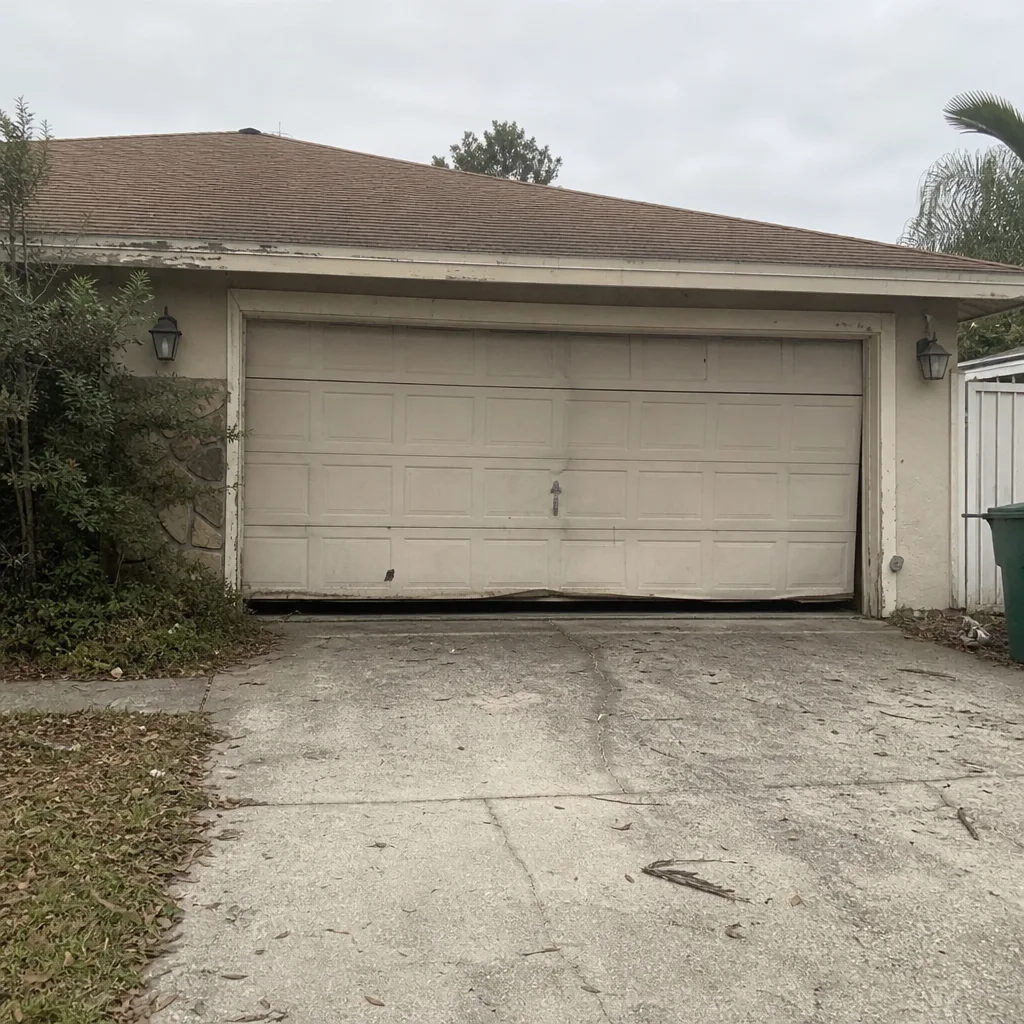
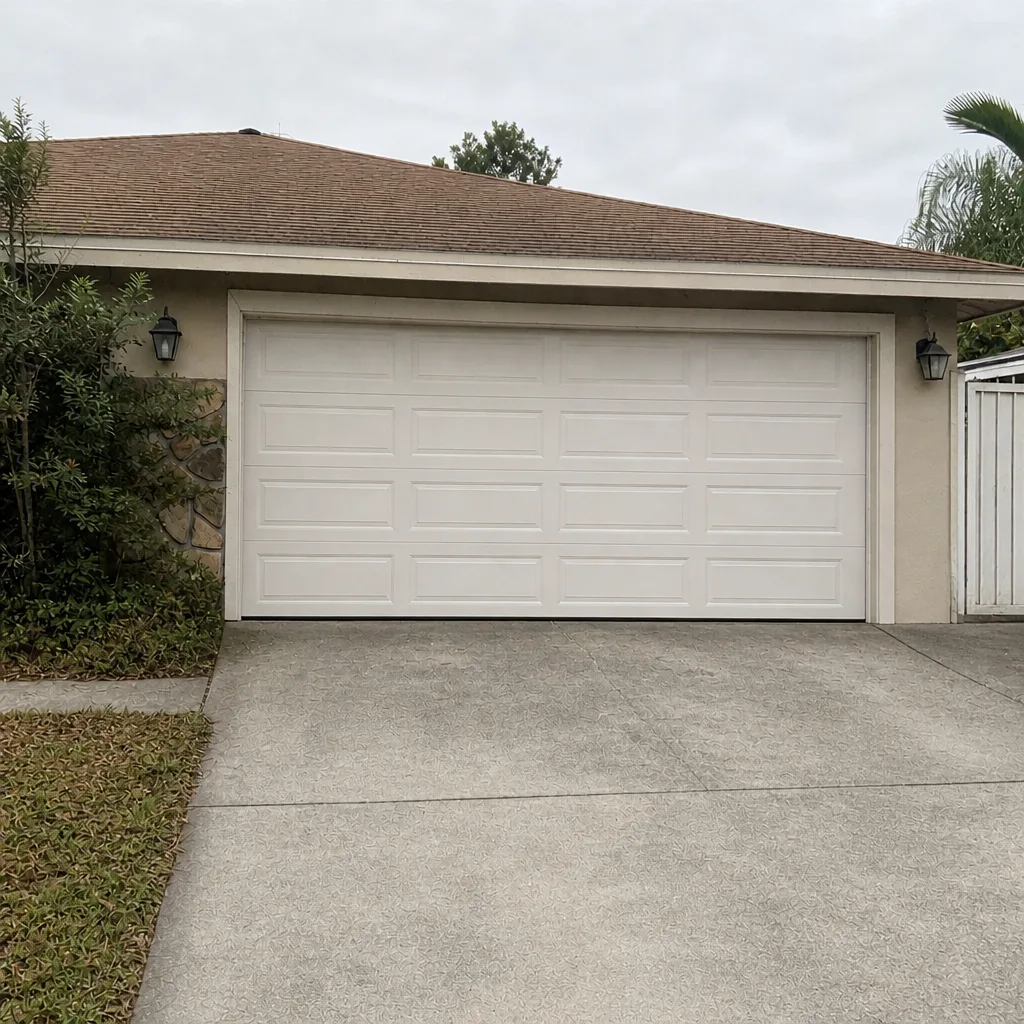
See the difference
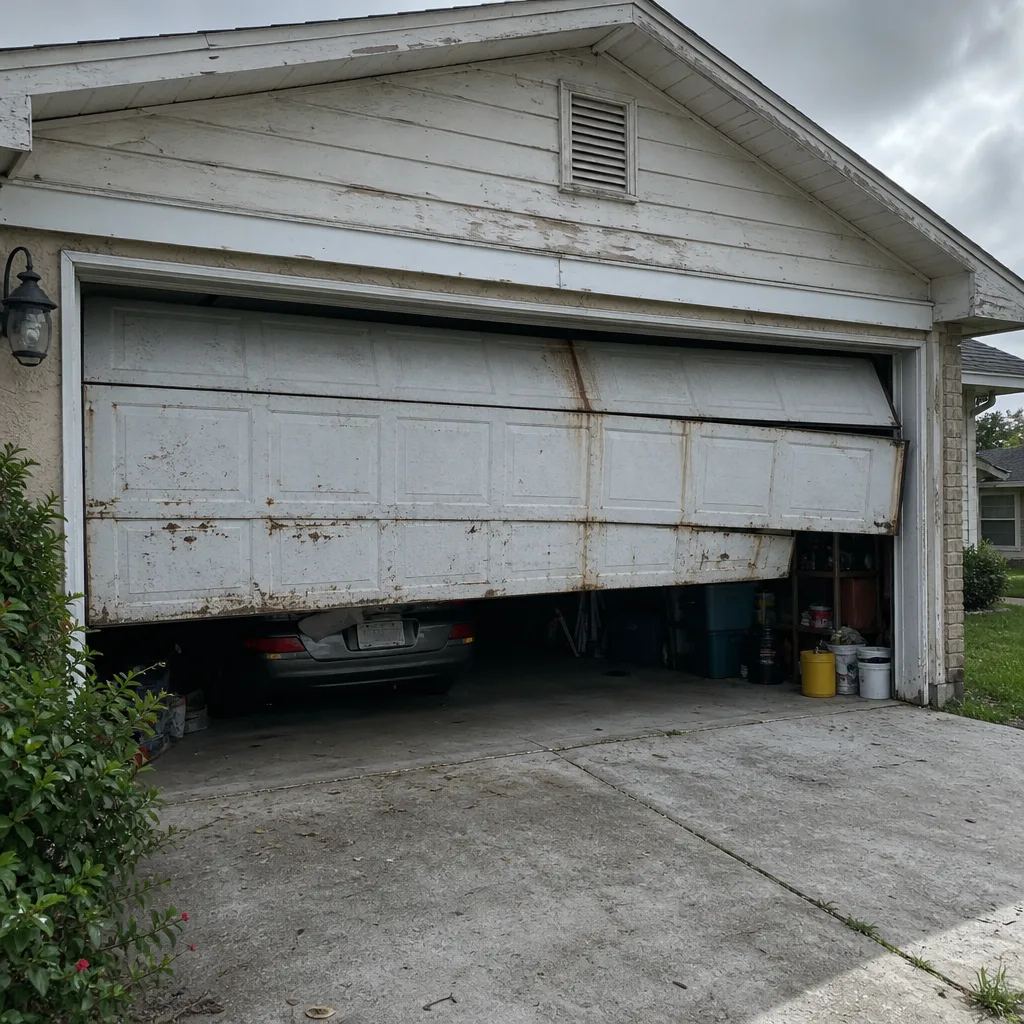 Before
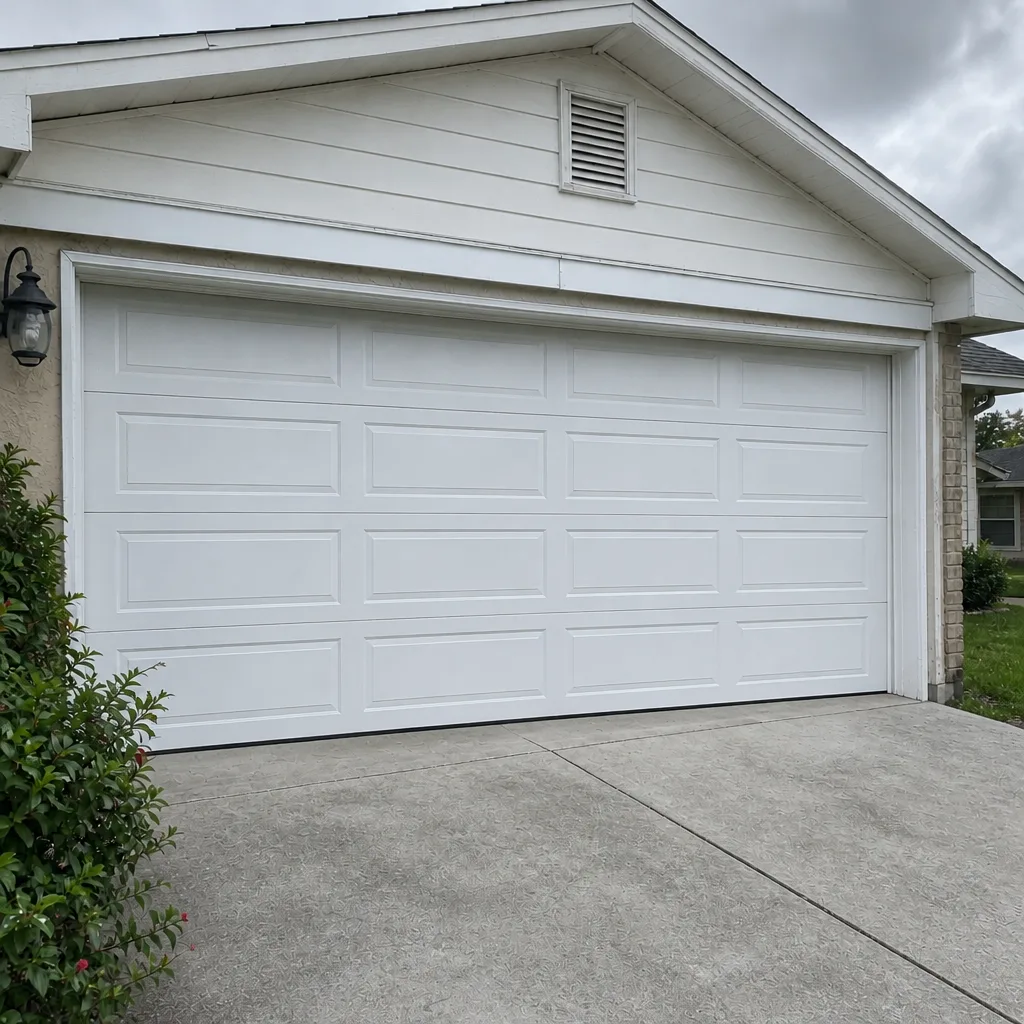 After
 Before
 After
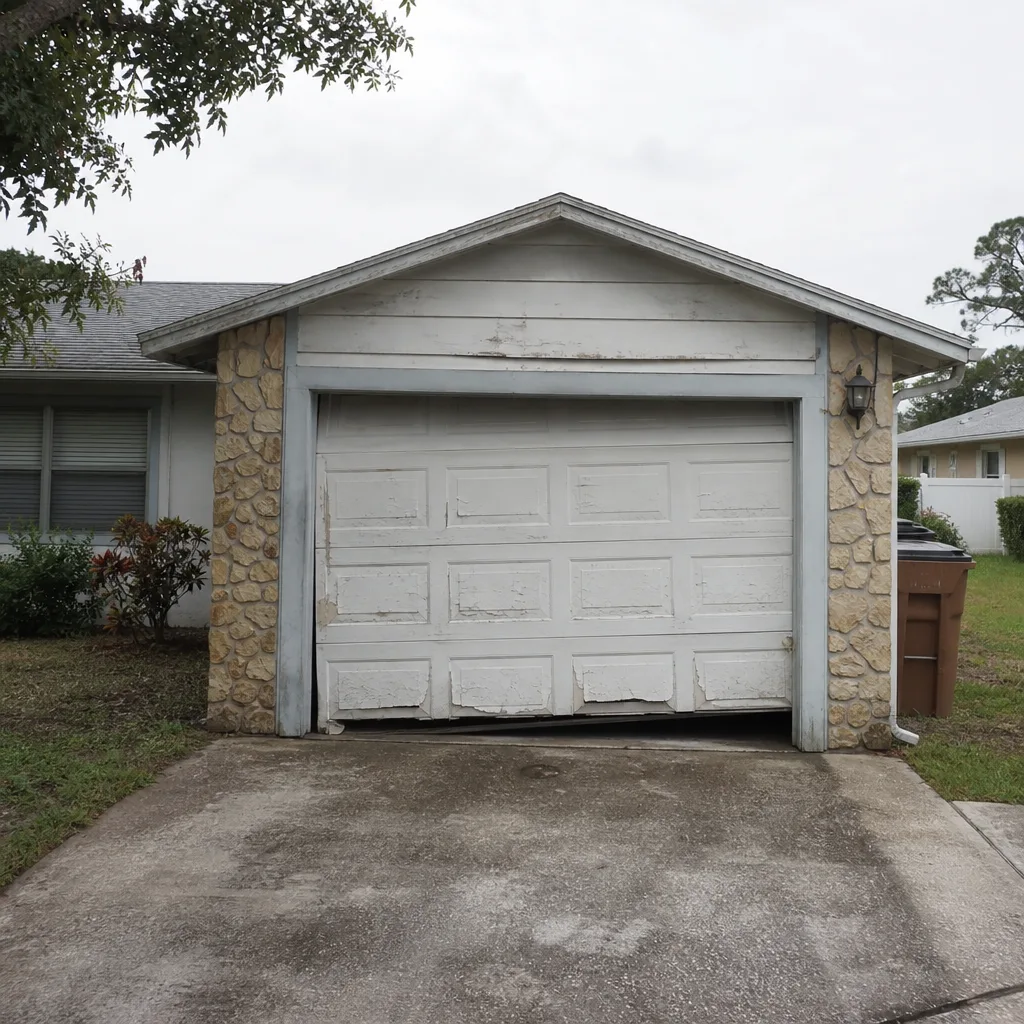 Before
 After
When to Call a Professional
Call us when you see pitting on a spring, when a door slams or reverses on its own, when a cable looks loose or frayed, or when you hear that loud pop from overhead. Call if a door gets harder to lift, if one side sags, or if the opener grinds or strains. Springs, cables, and the torsion system are high-tension, high-risk components, and a trained technician is the right person for all of them. Daytona Beach Garage Door Repair Co offers free estimates in Daytona Beach – call (888) 848-8460. We answer 24/7. Fast dispatch from 7am to 7pm, Sunday through Friday. Every technician who comes out is trained on the leading brands and works one trade only: garage doors.
Frequently Asked Questions
Rust becomes an emergency when you can see pitting or flaking on the spring coil itself, not when the surface of a door panel shows a little orange film. Panel rust is cosmetic and slow; coil pitting weakens a high-tension part that can snap without much warning. If you’re unsure which you’re looking at, call (888) 848-8460 – estimates are free.
No. A sensor or obstruction is the most common cause, but in Daytona Beach’s summer heat a track that expands and binds is a real second possibility. Check whether the reversal happens at the hottest part of the day or at a consistent height; that timing usually separates a sensor fault from a track issue. Call (888) 848-8460 for a diagnosis if it recurs.
Same day. That sound is almost always a spring failing, and a door with a broken spring is heavy and dangerous to operate. Don’t try to lift it by hand. Call (888) 848-8460 and keep clear of the door until a technician arrives.
Turning up the force limit can make a stiff door move, but it doesn’t fix the underlying problem, and it puts more strain on the opener and the door. A stiff door usually points to a spring, balance, or roller issue. Have it checked before raising the setting – call (888) 848-8460 for a free estimate.
The local pro we connect you with is licensed and insured as their state requires. Our technicians have up to 13 years of experience with garage door repair, spring work, and opener service, and they work only on the brands we’ve named. Call (888) 848-8460 for details on the estimate process.
We work on the leading opener brands, including LiftMaster, Chamberlain, Genie, and Craftsman, and on doors from Clopay, Amarr, Wayne Dalton, Raynor, and others in that class. If your opener or door is a brand outside that list, call (888) 848-8460 and we’ll confirm whether we can help.
The Bottom Line
Most garage door warning signs are universal, but the timeline is local. In Daytona Beach, a small amount of rust is a bigger deal than it would be inland, and a door that reverses on a summer afternoon might be fighting a heat-expanded track instead of a bad sensor. Watch for pitting on the springs, listen for grinding, cracking, or squealing, and check your door’s balance each month. Use the same-day list when in doubt, and never touch the spring or cable area yourself. A specialist can tell the difference between cosmetic wear and a fast-moving failure and can repair what’s there before it turns into a door-down day.
Written by the team at Daytona Beach Garage Door Repair Co.